
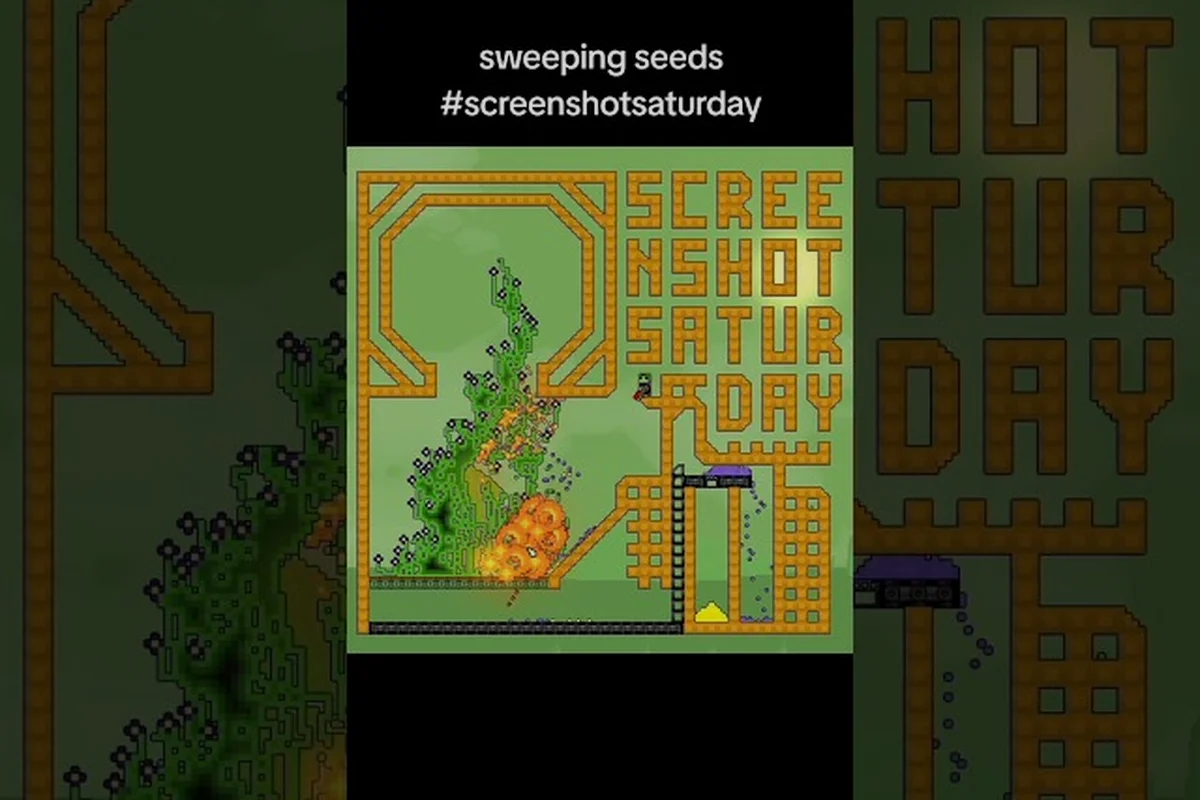
Every Sandustry resources guide starts with the same realization: the world around you is alive, and every pixel behaves individually. Sand falls, water flows, ice melts, and steam rises — which means the materials you need are never static, and learning where they spawn is only half the battle. Understanding how each resource moves and transforms is what separates a struggling base from a thriving factory, so this guide breaks down every material by location, behavior, and the fastest ways to farm it.
Because the simulation treats each pixel as an independent particle, resources don't sit in convenient ore veins waiting to be mined. Instead, you'll track Sandustry sand deposits, chase melting ice, and manage water reservoirs that deplete as sand absorbs moisture. The official Steam page confirms that sand absorbs surrounding water and depletes reservoirs, while ice melts into water that boils into steam and condenses into rain — a full cycle you can exploit. Get ready to map out every material source and turn the chaos into a production pipeline.
The Core Sandustry Resources You Need Early
The first hour of any Sandustry playthrough revolves around securing four basic materials: sand, water, ice, and snow. These form the foundation of every production chain, and each one behaves differently enough that you need a dedicated collection strategy. The official website describes the game as a factory game with sand physics where every pixel simulates independently, so treat each material as a living element rather than a static block.
Sand is the backbone of the entire game, and it appears in massive deposits across most biomes. It piles naturally, flows downhill, and absorbs surrounding water, which means you can accidentally drain a reservoir just by placing sand nearby. Water collects in low areas and reservoirs, but it evaporates when heated and gets absorbed by sand, so you'll constantly monitor your supply. Ice forms in colder regions and melts when temperatures rise, creating water that can either help or flood your base depending on where it sits. Snow behaves similarly to sand but melts into water when exposed to heat, making it a seasonal resource in many maps.
Here's a quick breakdown of where each material typically appears:
-
Sand: desert biomes, riverbanks, and underground deposits — the most abundant resource in the game
-
Water: reservoirs, lakes, and condensation from steam — requires careful management to avoid depletion
-
Ice: cold biomes, mountain peaks, and frozen lakes — melts when heated, so harvest fast
-
Snow: high-altitude areas and winter zones — converts to water when temperatures rise
-
Gold: rare underground deposits and processed from specific ore types — the primary currency for advanced crafting
-
Slag: byproduct of burning and processing — can be burned further or refined into useful materials
The Sandustry resources system rewards players who understand the water cycle. According to the official simulation rewrite video, water flows, ice melts, steam rises, and condenses into rain — which means you can create infinite water loops if you design your base correctly. Most early-game players waste time chasing individual resources when they should be building collection points that exploit these natural cycles.
Sand: The Foundation of Every Factory
Sand is the material you'll never stop needing, and it's also the most forgiving to collect. It appears in massive quantities across most maps, but the trick is finding deposits that don't require constant repositioning. The game's official description mentions that sand absorbs surrounding water and depletes reservoirs, so you need to be careful about where you place your collection points.
Where Sand Deposits Form
Sand tends to accumulate in predictable patterns based on the terrain. Desert biomes offer the densest concentrations, but riverbanks and coastal areas also produce steady supplies as water carries particles downstream. Underground deposits exist too, though they're harder to reach and often require excavation equipment that you won't have in the early game.
The most efficient approach is to identify a large sand pile near your base and build a collection point that automatically gathers falling particles. Since sand flows downhill, you can create channels that direct it toward your storage. Many players report that the best early-game strategy is to find a slope with a steady sand supply and let gravity do the work.
Sand Processing Chain Steps
Raw sand isn't always useful on its own, and you'll need to process it for certain recipes. The processing chain typically involves filtering, heating, and combining sand with other materials. According to community reports, the most common early-game processing steps are:
-
Filtering removes impurities and produces cleaner sand for glass-making
-
Heating transforms sand into glass, which is essential for windows and containers
-
Mixing sand with water creates mud, which can be dried into bricks
-
Compressing sand under pressure produces sandstone, a stronger building material
| Sand Type | Source Location | Processing Required | Primary Use |
|---|---|---|---|
| Raw Sand | Deserts, riverbanks | None | Filler, basic structures |
| Glass Sand | Filtered from raw | Filtering | Windows, containers |
| Mud | Sand + water mix | Drying | Bricks, pottery |
| Sandstone | Compressed sand | Pressure | Strong buildings |
The Sandustry sand economy is surprisingly deep for a material that seems so simple. Once you understand the processing chains, you'll realize that sand isn't just a building block — it's a versatile resource that feeds multiple production lines. For a deeper look at collection strategies, check out our guide on how to get sand efficiently, which covers advanced techniques for maximizing your yield.
Water, Ice, and Snow: Managing the Cold Chain
Water-based resources require more finesse than sand because they're constantly changing state. Ice melts, snow evaporates, and water gets absorbed by surrounding materials, so you can't just set up a collection point and forget about it. The official Steam description confirms that ice melts to water, water boils to steam that rises and condenses into rain, and sand absorbs surrounding water — a full cycle that you can either fight or exploit.
Ice Mining Strategy Guide
Ice appears in cold biomes and frozen lakes, and it's valuable both as a material and as a water source. When you mine ice, it either stays solid (if kept cold) or melts into water (if exposed to heat). The key is controlling the temperature around your collection point.
Players who master ice mining typically build insulated storage that keeps ice frozen until they're ready to process it. This allows them to stockpile ice during cold periods and use it as a water source during warm phases. According to community testing, ice melts faster when surrounded by warm materials like sand or near heat sources, so placement matters significantly.
Snow Collection and Conversion
Snow behaves similarly to ice but melts more quickly and produces less water per pixel. It's most useful as a temporary water source or as a cooling agent for industrial processes. Some players use snow to regulate temperatures in their factories, preventing overheating in sensitive equipment.
| Resource | Melting Point | Water Yield | Best Collection Method |
|---|---|---|---|
| Ice | Low | High | Insulated storage, cold biomes |
| Snow | Very low | Medium | Rapid collection, high altitude |
| Water | N/A | N/A | Reservoirs, condensation traps |
| Steam | N/A | N/A | Condensation towers |
The Sandustry water management system is one of the most complex parts of the game, and it's also one of the most rewarding to master. Players who understand the water cycle can create self-sustaining systems that produce infinite water through evaporation and condensation. The simulation explained guide covers these mechanics in depth, including how to build efficient condensation towers.
The Water Cycle Exploit
Here's where things get interesting: because water evaporates into steam and steam condenses into rain, you can create a closed loop that produces water indefinitely. The trick is building a sealed chamber where you heat water, collect the steam, and then cool it back into liquid form.
This technique requires careful temperature management, but the payoff is significant. Players who master the water cycle can support massive factories without ever worrying about water depletion. The official simulation rewrite video demonstrates this cycle in action, showing how water flows, evaporates, and returns as rain.
Gold and Precious Materials
Gold is the resource that unlocks advanced crafting, and it's significantly rarer than sand or water. You won't find it lying on the surface — it requires either deep mining or complex processing chains to extract. According to community reports, gold deposits appear in specific underground layers, and the depth varies by map seed.
Locating Gold Deposits
Gold typically appears in underground caverns and mineral-rich rock formations. You'll need excavation equipment to reach these areas, which means gold farming is usually a mid-game activity. However, some players report finding surface-level gold in specific biomes, particularly near volcanic activity where heat has pushed minerals upward.
The most reliable method is to dig downward in a spiral pattern, checking each layer for gold veins. Gold deposits appear as distinct yellow pixels mixed into darker rock, and they're easier to spot once you know what to look for. Some players use the Sandustry gold detection technique of watching for slight color variations in the rock texture.
Processing Gold Ore
Raw gold ore requires processing before it's usable in crafting recipes. The typical chain involves crushing the ore, separating the gold from waste material, and then smelting it into pure gold bars. This process requires specific equipment that you'll need to build and maintain.
| Processing Stage | Equipment Needed | Output | Time Required |
|---|---|---|---|
| Mining | Excavator | Raw ore | Variable |
| Crushing | Crusher | Crushed ore | 30 seconds |
| Separation | Washer | Gold concentrate | 45 seconds |
| Smelting | Furnace | Gold bars | 60 seconds |
The Sandustry resources system treats gold as a high-tier material, and the processing chain reflects that. Each stage requires energy and produces waste products, so you'll need to manage your production line carefully. For a complete breakdown of production chains, check out our production chain setup guide, which covers efficient layouts for gold processing and other advanced materials.
Efficient Resource Farming Routes
Once you understand where each material spawns and how it behaves, the next step is optimizing your collection routes. The most efficient players don't wander around collecting resources — they build systems that gather materials automatically. According to community data, automated collection can increase your resource yield by 300% or more compared to manual gathering.
Route Planning Basics
Start by mapping your local area and identifying all resource deposits within a reasonable distance of your base. Prioritize deposits that are close together and easy to reach, then build collection points that funnel materials back to your storage. The key is minimizing travel time while maximizing collection efficiency.
A good early-game route might include:
-
Sand deposit near your base — set up an automatic collector
-
Ice field within walking distance — build insulated storage nearby
-
Water reservoir — create a channel that directs water to your base
-
Gold vein — mark the location for later excavation
Automation Priorities
Not all resources are worth automating immediately. Sand and water are high-priority because you need them constantly, while gold and rare materials can wait until you have better equipment. Focus your automation efforts on the resources that bottleneck your production.
| Resource | Automation Priority | Recommended Method | Payback Time |
|---|---|---|---|
| Sand | High | Gravity channels | Immediate |
| Water | High | Condensation tower | 5 minutes |
| Ice | Medium | Insulated collector | 10 minutes |
| Gold | Low | Manual mining | 30 minutes |
The Sandustry collecting resources system rewards players who think ahead. Every automated collection point you build frees up time for exploration and base expansion, so prioritize automation early. For a complete breakdown of collection strategies, see our collecting resources guide, which covers advanced automation techniques and optimal base layouts.
Frequently Asked Questions
What is the fastest way to get sand in Sandustry?
The fastest method is finding a large sand deposit on a slope and building a gravity channel that directs falling sand into your storage. This requires minimal equipment and works from the very start of the game. Desert biomes offer the densest deposits, so consider relocating your base if sand is scarce nearby.
How do I prevent water from being absorbed by sand?
Keep sand away from your water reservoirs by building barriers or using non-absorbent materials like glass or processed stone. Since sand absorbs surrounding water and depletes reservoirs, you need to create physical separation between sand storage and water collection areas. Glass walls work particularly well because they're transparent and non-porous.
Where can I find gold in Sandustry?
Gold appears in underground deposits, typically at deeper levels than other minerals. Dig downward in a spiral pattern and watch for yellow pixels mixed into darker rock. Some players report finding surface gold near volcanic activity, but underground mining is the most reliable method. You'll need excavation equipment to reach most deposits.
Can I create infinite water in Sandustry?
Yes, by building a sealed chamber that heats water into steam, collects the vapor, and cools it back into liquid. This condensation loop produces water indefinitely as long as you maintain the temperature difference. The official simulation rewrite video demonstrates this cycle, and many players use it to support large-scale factories without worrying about water depletion.
How does snow differ from ice as a resource?
Snow melts faster than ice and produces less water per pixel, making it less efficient as a water source. However, snow is useful as a cooling agent for industrial processes and appears in more locations than ice. Some players use snow to regulate temperatures in their factories, preventing overheating in sensitive equipment.