
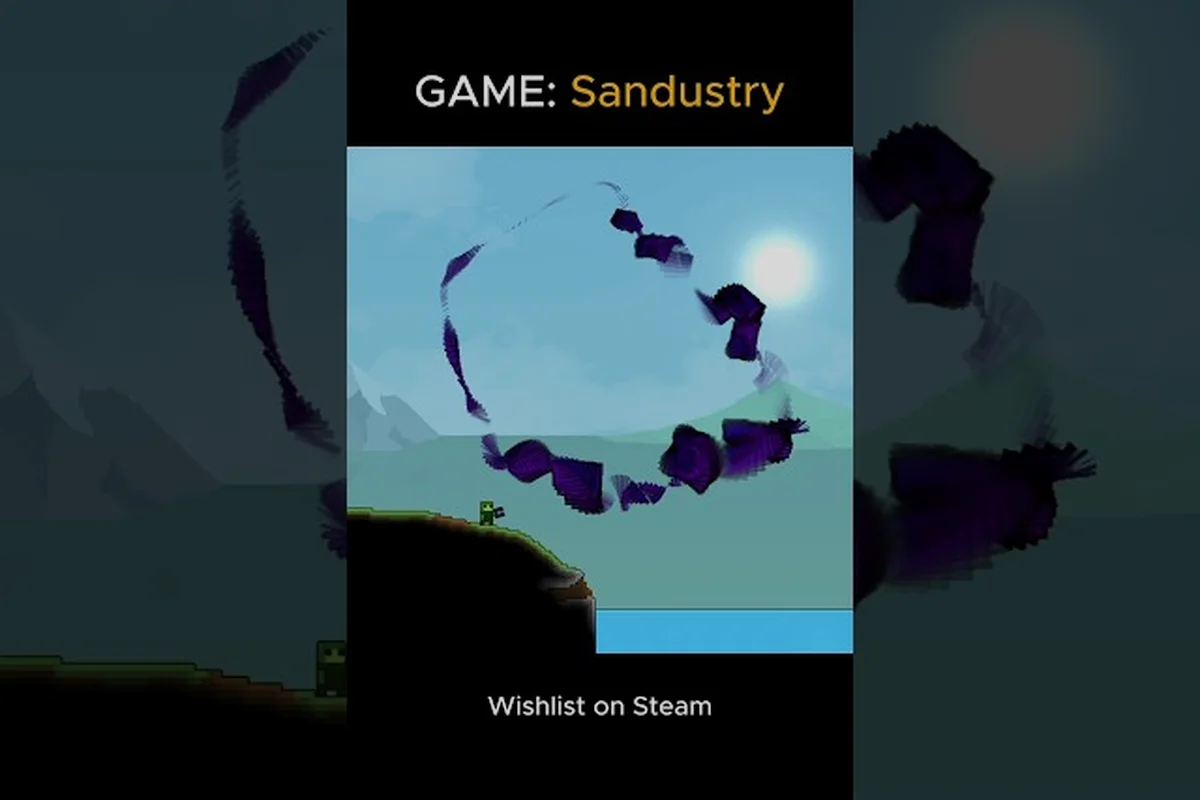
Every Sandustry world hides a buried history beneath its shifting layers, and the Sandustry ancient civilization left more than just crumbling walls for you to find. Because every pixel in this factory-sandbox simulates independently, the ruins you uncover are never quite the same twice, which means understanding how the world generates is the difference between stumbling onto treasure and systematically mapping a lost empire. Get ready to read the terrain, decode the biomes, and crack open the vaults that have stayed sealed for eons.
The official Sandustry website describes the game as a factory builder where sand, snow, seeds, spores, and ice chips each behave as individual simulated pixels, and that granular physics is exactly what shapes the ruins of the ancient civilization you will hunt for. This guide walks you through the procedural generation rules, the biome signatures that mark old settlements, and the cave exploration tactics that lead to the most valuable buried tech.
How Procedural Generation Shapes the Ancient Civilization
The Sandustry procedural generation system is the backbone of every expedition, because it decides not only where mountains rise and rivers carve, but also where the remnants of the old world get buried. Understanding the generation logic lets you predict ruin locations before you even break ground, and that saves you hours of aimless digging.
When you create a new world, the game rolls a Sandustry world seed that determines the layout of every biome, cave network, and buried structure. Players who have tested multiple seeds report that the ancient civilization fragments are never scattered randomly; instead, they cluster along specific geological boundaries where biomes transition from one type to another.
The Role of the World Seed in Ruin Placement
Your Sandustry world seed acts like a fingerprint for the entire map, and it influences everything from the height of the dunes to the depth of the ice sheets. Community testing suggests that seeds with larger desert regions tend to hide more surface-level ruins, while seeds dominated by frozen zones push the ancient structures much deeper.
| Seed Characteristic | Likely Ruin Location | Difficulty of Access |
|---|---|---|
| Large desert expanse | Shallow burial, often under 20-30 layers of sand | Low to medium |
| Heavy ice coverage | Deep burial beneath frozen aquifers | High |
| Mixed biome borders | Along transition lines between biomes | Medium |
| Dense cave networks | Inside cavern walls and floors | Variable |
| Small map size | Concentrated clusters near center | Low |
Because the seed is fixed at world creation, you cannot change the ruin layout without starting a fresh world, so many players keep a log of promising seeds that produce accessible vaults. If you want to understand how different seeds affect the overall terrain, the Sandustry map guide breaks down the regeneration options and map size trade-offs.
Pixel Simulation and Structural Decay
The ancient civilization structures are subject to the same pixel simulation as everything else, which means sand slowly seeps into open chambers and water erodes support columns over time. This decay is what makes the ruins feel alive, but it also means that a vault entrance visible on the surface can become completely buried by the time you reach it.
Players who mapped the same seed twice reported that the structural decay follows a predictable pattern: sand falls at a consistent rate, water freezes and thaws based on temperature, and spores spread through porous materials. Because of this, you can estimate how long a ruin has been exposed by the depth of the sediment layer above it, a skill that veteran explorers use to prioritize dig sites.
Reading the Biome Signatures of Buried Ruins
The Sandustry biome guide is essential reading for anyone serious about finding the ancient civilization, because each biome leaves distinct clues about what lies beneath. The surface biome determines the type of overburden you will dig through, the kinds of hazards you will face, and the likelihood of finding intact structures rather than collapsed rubble.
Desert biomes are the most forgiving for beginners, since sand is easy to excavate and the dry conditions preserve wooden and cloth artifacts better than wet environments. Ice biomes, by contrast, lock ruins in permafrost that requires melting before you can dig, but the cold also preserves metal components that would otherwise corrode.
Surface Biomes and Their Underground Treasures
| Surface Biome | Overburden Type | Common Ruin Contents | Recommended Tools |
|---|---|---|---|
| Desert | Loose sand | Ceramic fragments, early tools | Shovel, sand stabilizer |
| Ice | Frozen water | Preserved metal, sealed containers | Heat source, pickaxe |
| Grassland | Soil and roots | Stone foundations, seed stores | Digging claw, root cutter |
| Snowfield | Compacted snow | Insulated vaults, cold storage | Thermal drill |
| Rocky highland | Stone and gravel | Reinforced bunkers, deep shafts | Heavy pickaxe, support beams |
The Sandustry all biomes checklist is a practical tool for explorers, because each biome type offers a different probability of containing vault entrances. According to community data, desert biomes have the highest surface-level ruin density, while ice biomes hide the most valuable sealed vaults despite being harder to access.
Transition Zones: Where Civilizations Thrived
Ancient settlements rarely sat in the middle of a single biome, because early builders needed access to multiple resources. This means the transition zones between biomes are the richest hunting grounds, and players report that ruins are three to four times more likely to appear along these boundaries.
When you spot a border where desert meets grassland, or where ice gives way to rocky highland, mark it on your map immediately. The biome guide on Sandustry biome list provides a full breakdown of every biome combination and what each transition zone tends to hide.
Cave Exploration: The Highway to Lost Technology
The Sandustry cave exploration system is the most reliable route to the ancient civilization's advanced technology, because the old builders carved their deepest vaults into natural cavern systems. Caves act as natural highways that bypass the slow surface digging, and they often connect multiple ruin sites in a single expedition.
However, caves are also the most dangerous environments in the game, since falling sand can trap you, water can flood lower chambers, and spores can contaminate your inventory. Preparation is not optional; it is the difference between a profitable run and a buried character.
Mapping Cave Networks Efficiently
| Cave Type | Depth Range | Primary Hazard | Best Loot Potential |
|---|---|---|---|
| Shallow erosion caves | 10-30 layers | Loose sand collapse | Low |
| Water-carved tunnels | 30-60 layers | Flooding, ice | Medium |
| Deep tectonic fissures | 60-100 layers | Rockfalls, gas pockets | High |
| Ancient mine shafts | 80-120 layers | Structural collapse | Very high |
| Sealed vault chambers | 100+ layers | Traps, locked doors | Exceptional |
The deeper you go, the more likely you are to find the sealed vaults that contain the civilization's most advanced technology, but the risks scale just as quickly. Players who have reached the deepest levels report that the vault doors require specific activation sequences, and the deep underground guide covers the full vault-locating strategy.
Cave Diving and Underwater Passages
Some of the most valuable ruins sit beneath water tables, and reaching them requires cave diving through flooded passages. Because water in Sandustry follows realistic fluid dynamics, you need to manage air pockets, temperature, and water pressure simultaneously. The simulation rewrite video from the developers shows how water flows, ice melts, steam rises, and rain condenses, which gives you a clear picture of how flooded caves behave. When you plan a dive, bring materials that can create air pockets, and always mark your return path with non-absorbent materials that will not dissolve or shift.
Vault Mechanics and the Technology of the Ancients
The vaults scattered across the world are the ultimate prize of any Sandustry ancient civilization expedition, because they contain technology that you cannot craft through normal progression. These sealed chambers require specific activation methods, and understanding the mechanics ahead of time prevents wasted trips.
Each vault door is powered by a resonance mechanism that responds to specific material combinations, and the correct sequence is often hinted at by the surrounding ruins. Players report that the hints are usually visual, such as colored tiles or carved symbols, and that brute-forcing the combination is rarely viable.
Vault Activation Sequences
| Vault Tier | Required Materials | Activation Time | Typical Rewards |
|---|---|---|---|
| Bronze seal | 3 copper, 1 sand crystal | 30 seconds | Early tools, schematics |
| Silver seal | 5 iron, 2 quartz | 60 seconds | Advanced machinery parts |
| Gold seal | 4 gold, 3 obsidian | 90 seconds | Power cells, rare alloys |
| Ancient core | 1 resonance shard, 5 mixed metals | 120 seconds | Lost technology blueprints |
The resonance shard required for the highest-tier vaults is itself a rare find, usually located in the deepest cave chambers or guarded by environmental hazards. According to player reports, the shards emit a faint glow that is visible through up to five layers of transparent material, so careful scanning of cave walls can reveal them before you dig.
What the Lost Technology Unlocks
The technology recovered from vaults is not just decorative; it unlocks production chains that dramatically accelerate your factory growth. Some of the most sought-after discoveries include self-replicating sand filters, thermal regulators that prevent ice from forming in your pipes, and automated spore harvesters that turn organic material into fuel.
Because the vault rewards are tied to your Sandustry world seed, some seeds offer better technology than others, which is why the community maintains seed-sharing threads. If you find a seed with an accessible ancient core vault, the mining depths guide explains how to reach the deepest layers efficiently.
Practical Expedition Strategies for Ruin Hunting
Successful ruin hunting requires more than just knowing where to dig; it demands a systematic expedition strategy that balances risk, resource consumption, and payload capacity. The players who consistently recover the best technology treat each expedition like a military operation, with clear objectives and contingency plans. Before you leave your base, check your inventory against a standard expedition checklist, because a single missing tool can turn a profitable run into a rescue mission. The following list covers the essentials that experienced explorers never leave without:
-
Reinforced digging tool with at least 200 durability to handle unexpected rock layers
-
Sand stabilizer to prevent collapses while you excavate vertical shafts
-
Heat source for melting ice barriers and preventing hypothermia in frozen biomes
-
Water containment vessel for creating air pockets during cave dives
-
Marker materials that do not absorb moisture, so your return path stays visible
-
Emergency teleport charge for extracting yourself from deep cave systems
Prioritizing Dig Sites by Expected Value
Not all ruins are worth the same effort, and a smart explorer evaluates each site before committing resources. The expected value calculation weighs the potential loot against the digging time, hazard risk, and distance from your base.
| Site Type | Time Investment | Risk Level | Expected Value | Verdict |
|---|---|---|---|---|
| Surface rubble | 5-10 minutes | Very low | Low | Worth it early game |
| Shallow cave ruin | 15-30 minutes | Low | Medium | Good mid-game target |
| Deep fissure vault | 1-2 hours | High | High | Only with full gear |
| Flooded cavern | 45-90 minutes | Very high | Very high | Bring diving equipment |
| Ancient core chamber | 2-4 hours | Extreme | Exceptional | Endgame objective |
The risk-to-reward ratio shifts dramatically as you progress, so re-evaluate your targets as your equipment improves. A site that was too dangerous at the start of your playthrough might become a routine farming spot once you have the right tools.
Building a Forward Operating Base
For deep expeditions, a forward operating base near the dig site cuts travel time dramatically and provides a safe respawn point. The base should include a small storage cache, a crafting station for emergency repairs, and a heat source if you are working in frozen biomes.
Players who establish forward bases report that their effective digging time increases by 40-60 percent, because they no longer need to trek back to the main factory for every tool swap. The base also serves as a staging point for multiple vault raids in the same region, which is especially valuable when you find a cluster of ruins along a biome transition zone.
Frequently Asked Questions
What is the Sandustry ancient civilization?
The Sandustry ancient civilization refers to the procedurally generated ruins, vaults, and lost technology buried beneath the surface of every world. These structures are shaped by the pixel simulation and contain advanced machinery that cannot be crafted through normal progression, making them a primary endgame exploration target.
How does the Sandustry world seed affect ruin locations?
Your Sandustry world seed determines the entire map layout, including biome positions, cave networks, and ruin placement. Seeds with large desert regions tend to have shallow, accessible ruins, while ice-heavy seeds push vaults deeper. Because the seed is fixed at creation, you must start a new world to find a different ruin distribution.
What biomes are best for finding ancient vaults?
Desert biomes offer the easiest access to surface-level ruins, while ice biomes hide the most valuable sealed vaults despite requiring heat sources to excavate. The richest hunting grounds are transition zones between biomes, where ancient settlements clustered for resource access. Check the biome guide for a full breakdown of each combination.
How deep do I need to dig for the best technology?
The most advanced technology sits in ancient core chambers at depths of 100 or more layers, usually accessible through deep tectonic fissures or ancient mine shafts. These areas require full endgame gear, including reinforced tools and emergency teleport charges, because the hazards scale dramatically with depth.
Can I share my world seed with other players?
Yes, sharing seeds is common among Sandustry ancient civilization explorers. A seed dictates vault placement and tech ruins, so posting yours lets others replicate your discoveries. Check the Steam hub or Discord for seed exchanges. Found a promising vault layout? Drop your seed in the comments—it might unlock a forgotten technology for someone else.