
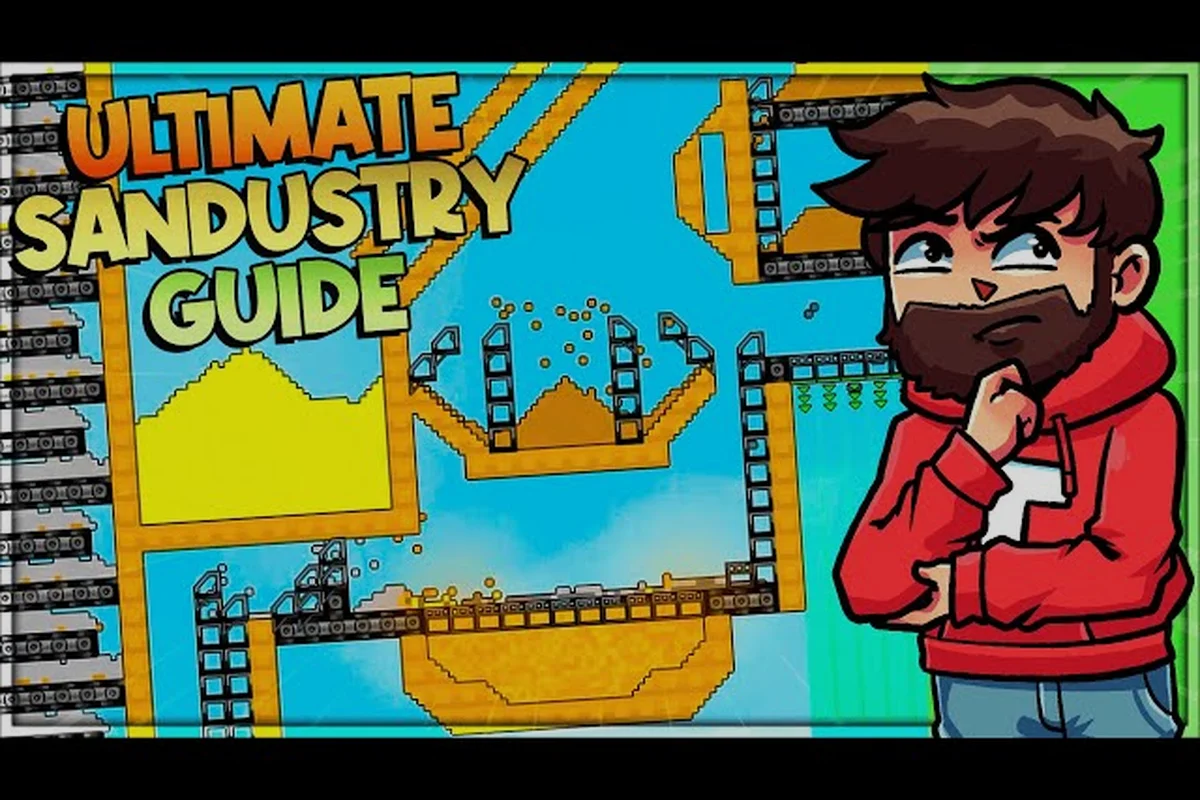
Sandustry drops you into a world where every single pixel of sand behaves on its own, and that granular physics is exactly what makes this factory builder so captivating. This Sandustry beginner guide walks you through your first session, from digging your initial handful of sand to wiring up a production line that runs while you plan your next move. The core loop is deceptively simple: mine raw material, sift out the valuable bits, and use those resources to build machines that do the work for you. Because every grain simulates independently, small inefficiencies compound quickly, so learning the fundamentals early makes a massive difference in how smoothly your factory scales.
Understanding the Sandustry Gameplay Loop Basics
The heart of Sandustry is a feedback loop that rewards observation and incremental improvement. You start with nothing but empty ground and a few basic tools, yet within an hour you can have a self-sustaining operation that extracts gold, processes slag, and manages water flow without constant babysitting. The beauty is that the game never holds your hand, so figuring out how each machine interacts with the pixel simulation becomes your primary job.
The official Sandustry website describes it as a factory game where sand, snow, seeds, spores, and ice chips each simulate independently. That single sentence explains why the game feels so alive: when you dump a bucket of sand, it piles up realistically, and when water touches it, the sand absorbs moisture and depletes the reservoir. These tiny interactions form the foundation of every production chain you will build.
Key mechanics to master in your first hour:
-
Mining — Digging sand and raw minerals from the terrain using handheld tools before you unlock automated drills.
-
Sifting — Running raw sand through filters to separate valuable gold particles from worthless grit.
-
Smelting — Processing collected materials into usable ingots and components for machine construction.
-
Water management — Controlling liquid flow because water is essential for several production steps, but it can also flood your workspaces if ignored.
-
Automation — Connecting machines with belts, lifts, and filters so resources move without manual intervention.
The game's Steam store page highlights that ice melts to water, water boils to steam that rises and condenses into rain, and slag can be burned and processed further. These environmental interactions are not just visual flair; they are the actual mechanics you will exploit to build efficient factories. For example, you can position a furnace near a water source so the steam it generates condenses back into usable water, creating a closed-loop system that never runs dry.
If you prefer watching before doing, the Sandustry demo trailer gives you a visual overview of the mining and building flow, while the early access release date trailer shows off the scale of factories you can eventually construct.
Getting Started: Your First Five Minutes
Your first session in Sandustry can feel overwhelming because there is no tutorial popup telling you exactly what to click. The game trusts you to experiment, which is refreshing but also means you need a clear plan. Here is exactly what to do from the moment you spawn.
Gather Your Initial Resources
Start by mining sand from the ground directly beneath you. You do not need any special tools for this; your bare hands or the starter shovel will break up the top layer quickly. Collect at least 50 units of sand before you do anything else, because sand is the universal building block for early structures and filters.
Your first priority list:
-
Collect 50+ sand from the surface.
-
Look for darker patches in the terrain, which usually indicate higher gold concentration.
-
Build a basic sifter using the sand you collected.
-
Process your first batch of raw sand to extract gold dust.
Build Your First Sifter
The sifter is the first machine you will construct, and it works exactly like a real-world gold pan. You feed raw sand into the top, and the machine shakes it back and forth while allowing finer particles to fall through a mesh. Gold, being denser than most sand grains, collects in a specific output slot while the waste material exits separately.
The crafting recipe requires only sand and a small amount of wood, which you can gather by mining the sparse vegetation scattered around the starting area. Once built, place the sifter on flat ground and connect a sand input using a simple hopper or by manually dumping sand into its intake.
Sifter output comparison:
| Input Material | Gold Yield | Waste Output | Processing Time |
|---|---|---|---|
| Surface sand | Low | High | 3 seconds |
| Dark sand | Medium | Medium | 4 seconds |
| Riverbed sand | High | Low | 5 seconds |
| Mixed gravel | Very low | Very high | 2 seconds |
As you can see, not all sand is created equal. Riverbed sand yields the most gold per batch, but it takes longer to process and requires you to venture near water, which introduces flood risks early on. Surface sand is the safest starting point because it is everywhere and processes quickly, even though the yield is modest.
Understand the Physics Before You Expand
The pixel simulation means that water flows downhill, sand piles at its natural angle of repose, and steam rises until it cools. These physics create both opportunities and hazards. For instance, if you dig a pit too close to a river, water will flood your mine and wash away loose sand. Conversely, you can deliberately channel water into a collection basin to create an infinite supply for later production steps.
Community reports suggest that new players lose their first factory to flooding more often than any other cause. The fix is simple: always leave a buffer zone of at least three tiles between your mining operation and any water source. This buffer gives you time to react if water starts seeping toward your machines.
Essential Machines and Their Functions
Once you have a steady supply of gold, you can start building more advanced machines that unlock the real potential of your factory. Each machine serves a specific purpose, and understanding their input and output requirements is critical to designing efficient production lines.
The Filter System
Filters are the workhorses of any Sandustry factory. They separate mixed materials into their component parts, allowing you to route each resource to the appropriate processing station. A basic filter can separate sand from gold dust, while advanced filters can distinguish between multiple types of ore simultaneously.
The filter guide covers advanced setups in detail, but the basics are straightforward: feed mixed material into the filter's input, and it splits the output across multiple channels based on particle size and density. You can chain filters together to progressively refine materials, with each stage removing more impurities.
Pumps and Water Control
Water is both a resource and a hazard in Sandustry. Pumps allow you to move water from a source to where you need it, but they require power and careful placement. A pump placed too high above the water level will struggle to draw liquid, while a pump placed too low risks being submerged and short-circuiting.
Machine comparison table:
| Machine | Input | Output | Power Required | Best Use Case |
|---|---|---|---|---|
| Sifter | Raw sand | Gold dust + waste | None | Early game gold extraction |
| Filter | Mixed materials | Separated resources | Low | Sorting multiple ore types |
| Pump | Water source | Flowing water | Medium | Supplying production lines |
| Furnace | Ore + fuel | Refined ingots | Medium | Converting ore to usable metal |
| Lift | Items from below | Items elevated | Low | Moving resources upward |
Automation Basics
Automation is where Sandustry transforms from a mining sim into a true factory game. Belts move items between machines, inserters load and unload inputs, and logic gates let you control when machines activate based on resource levels. The learning curve is steep, but the payoff is enormous: a fully automated line can produce hundreds of ingots per minute while you focus on expanding your territory.
For a deeper dive into setting up your first automated production line, check out the automation guide for beginners. It walks through conveyor layouts, splitter ratios, and how to balance input and output speeds so no machine ever starves or backs up.
Progression Path: From Hand Mining to Full Automation
Sandustry does not have a traditional tech tree, but it does have a natural progression path that becomes clear as you experiment. Understanding this path helps you prioritize your efforts and avoid wasting resources on machines you do not need yet.
Phase One: Manual Extraction
In the first 15 minutes, you will mine sand by hand and process it through a single sifter. This phase teaches you the basic resource loop and helps you accumulate enough gold to build your first automated tools. Resist the urge to build multiple sifters right away; one is enough to get started, and the gold you save will fund more impactful upgrades.
Phase Two: Basic Automation
Once you have roughly 100 gold, you can build your first belt and inserter setup. This allows you to feed sand into the sifter automatically and collect the gold output without standing there. The efficiency gain is immediate, and you will notice your gold reserves growing much faster.
Progression milestones:
| Milestone | Time to Reach | Key Unlocks | Recommended Next Step |
|---|---|---|---|
| First sifter | 5 minutes | Gold dust | Build a second sifter |
| First belt | 15 minutes | Automated feeding | Add filter to remove waste |
| First furnace | 30 minutes | Ingot production | Automate furnace input |
| First pump | 45 minutes | Water control | Build a closed-loop water system |
| Full automation | 2+ hours | Self-running factory | Expand to new mining areas |
Phase Three: Scaling Up
The mid-game is all about scaling. You will need multiple sifters running in parallel, a network of belts to move materials between them, and a robust power system to keep everything running. This is also when you should start thinking about vertical expansion, because horizontal space becomes scarce as your factory grows.
If you find yourself stuck on what to build next, the how to progress guide offers a structured roadmap that takes you from your first automated line to a sprawling industrial complex. It covers resource prioritization, expansion strategies, and how to avoid common bottlenecks that stall mid-game factories.
Beginner Mistakes: Digging and Sifting Pitfalls
Every Sandustry player makes mistakes in their first few sessions, but knowing the most common pitfalls ahead of time saves you hours of frustration. Here are the errors that community members report most frequently.
Flooding Your Workspace
The number one cause of early-game factory death is water flooding. Whether you dig too close to a river or misplace a pump, water can quickly overwhelm your machines and wash away loose resources. Always maintain a buffer zone around water sources, and build your early factories on elevated ground whenever possible.
Overbuilding Too Early
It is tempting to build a dozen sifters as soon as you unlock them, but this is a trap. Each machine requires maintenance and consumes resources, and if you cannot feed them all, they sit idle and waste your investment. Build one machine, verify it runs efficiently, then add another. This incremental approach keeps your factory lean and your resources available for critical upgrades.
Ignoring Waste Products
Every production step generates waste, and if you do not handle it, waste accumulates and blocks your machines. Build waste disposal early, whether that means dumping it in a designated pit or routing it to a secondary processing line. The starter guide covers waste management strategies in detail, including how to turn some waste products into usable materials.
Neglecting Water Management
Water is essential for many production chains, but it is also a finite resource that depletes as you use it. Sand absorbs surrounding water, so a production line that relies on a small pond will eventually dry it up. Plan for water sustainability by building collection basins that capture rain or by routing steam condensation back into your system.
Quick checklist before you expand:
-
Is there a buffer zone between my factory and any water source?
-
Can my current machines process the output of my new machine?
-
Where will waste products go?
-
Is my water supply sustainable for the new production line?
-
Do I have enough power to run everything simultaneously?
Frequently Asked Questions
What is the fastest way to get gold in Sandustry?
The fastest early-game method is mining riverbed sand and processing it through a sifter, because riverbed sand has the highest gold concentration per batch. However, riverbed sand requires you to work near water, which increases flood risk. If you prefer safety over speed, surface sand with multiple sifters running in parallel is a reliable alternative.
How do I prevent water from flooding my factory?
Maintain at least a three-tile buffer between your factory and any water source, and build on elevated ground when possible. If you use pumps, place them carefully so they do not overflow their containment area. You can also dig drainage channels that redirect excess water away from your machines.
Can I automate everything in Sandustry?
Yes, the game supports full automation of mining, processing, and material transport. You can build entirely self-running factories that require no manual intervention, though setting them up takes significant planning and resources. The automation systems are deep enough that experienced players spend dozens of hours optimizing their layouts.
Is the Sandustry demo worth trying before buying?
Absolutely. The demo gives you access to the core gameplay loop and enough content to understand whether the physics-based factory building appeals to you. Many players report that the demo sold them on the full game, and the demo walkthrough can help you make the most of your limited demo time.
What happens when I run out of sand in my starting area?
Sand in your starting area is finite, but you’ll have plenty before it runs dry. Once depleted, expand outward using lifts and long belts to tap fresh deposits. For a renewable trick, try the sand absorption mechanic—convert water into sand once you’ve unlocked advanced sifters.